Snow & Ice Management
Keep the power on and your customers warm when winter turns severe.
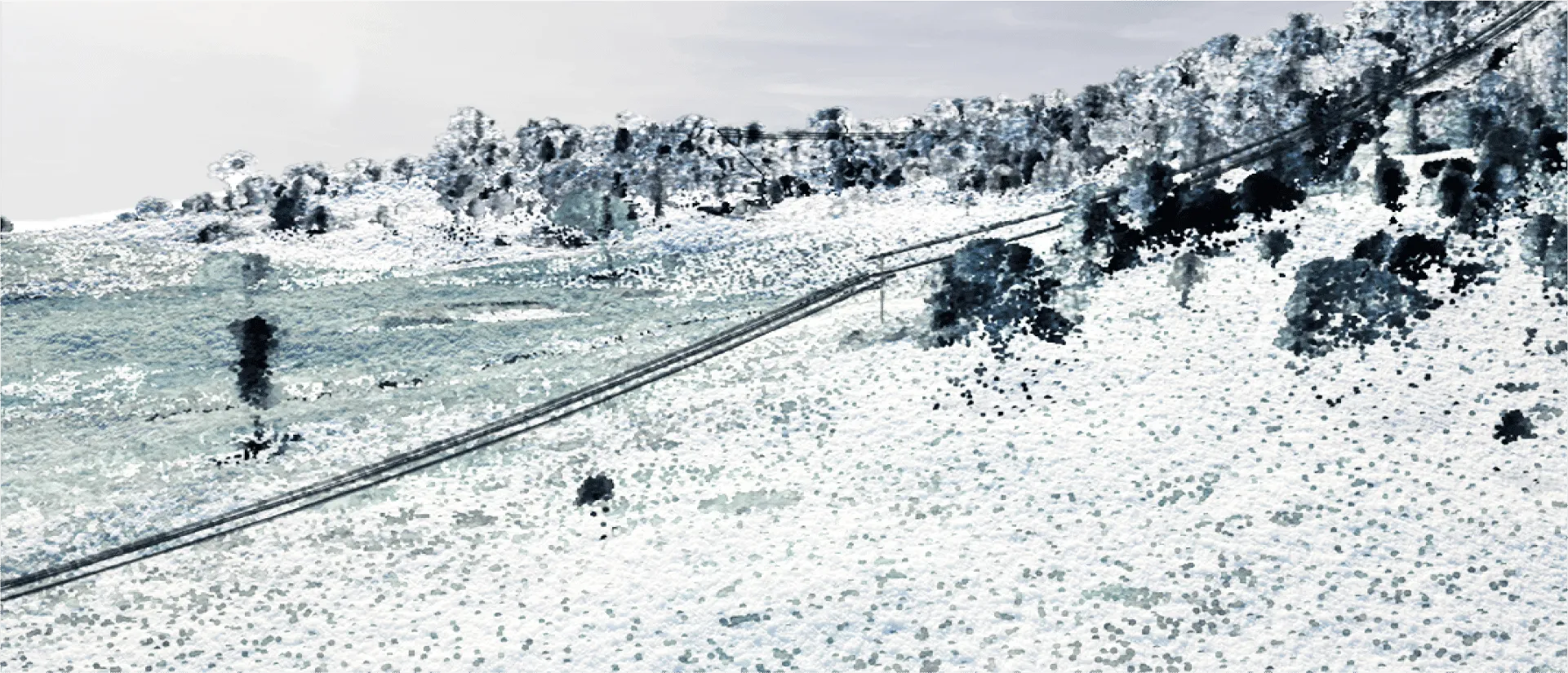
Extreme snow and ice can pull lines down, snap poles, and leave customers out in the cold. Your digital network model lets you see where winter will hit hardest, decide what to protect first, and plan how to bring customers back online with decisions you can defend.
- Simulate wintry weather to see where snow and ice are most likely to accumulate and cause structural damage or drive line temperatures low enough to risk loss of supply.
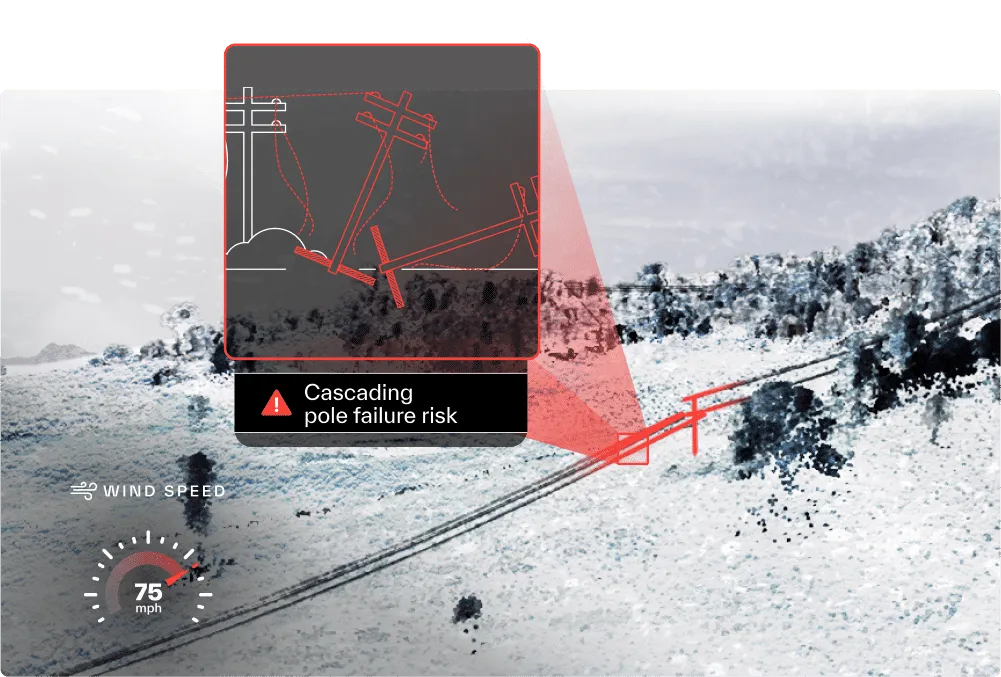
- Understand how a cascading pole failure scenario will play out under different loading conditions so you can act before equipment starts to fail.
- Restore power as soon as it is safely possible and apply what you learn from each storm to improve reliability for the next cold snap.
Where is your network most vulnerable to snow and ice?
Identify where snow and ice will be troublesome
Test how assets will behave under snow and ice loads across your territory by varying asset characteristics and weather conditions.
- See which spans, poles, and structures are most likely to overload, gallop, or lose clearance.
- Understand how snowfall depth and ice thickness at different elevations translate into mechanical stress.
- Pinpoint where equipment damage, outages, and hazards for crews and the community are most likely.
- Plan targeted grid hardening that fits your network instead of relying on generic design rules.
How do you stay ahead of failures as the storm develops?
Know where to direct your attention next
Track where snow is piling up, where ice is forming, and how your network is likely to respond as conditions change.
- See where loading is approaching critical limits and where cascading pole failures are most likely to start.
- Decide where to reduce loading, reconfigure, or shed demand before assets fail.
- Keep response crews, field teams, and local agencies aligned on what is happening and what comes next.
- Move from scattered reports to a shared, model based view of network risk.
How quickly and safely can you bring customers back online?
Heat up your network as fast as possible
Reduce the time it takes to restore power safely for as many customers as you can reach.
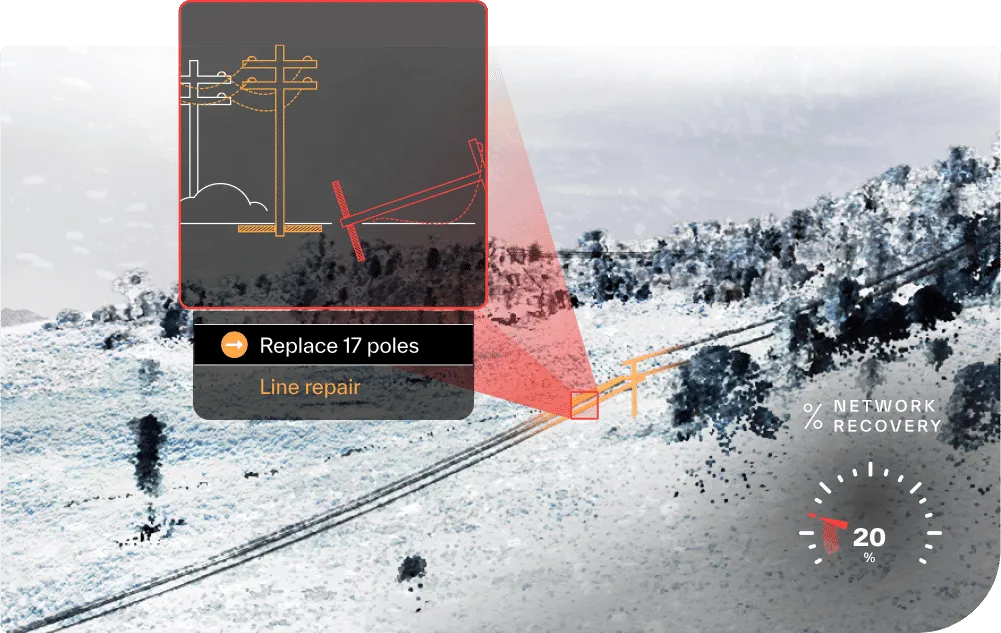
- Prioritize repairs based on which locations field teams can physically access under snow and ice.
- Pull a clear snapshot of damaged and at risk assets and the customers each repair will restore.
- Cut unnecessary truck rolls by giving crews a precise picture of damage and access before they leave the depot.
- Explain your winter response to leadership, regulators, and customers with transparent, auditable calculations.