


Build consensus on the “best” route faster by comparing route options end-to-end across terrain, easements, constructability, and cost, weighing long-term consequences, not just what's technically feasible.
Solutions
Design & Construction
De-risk network design by digitizing, validating, and real-world stress-testing plans in one shot.
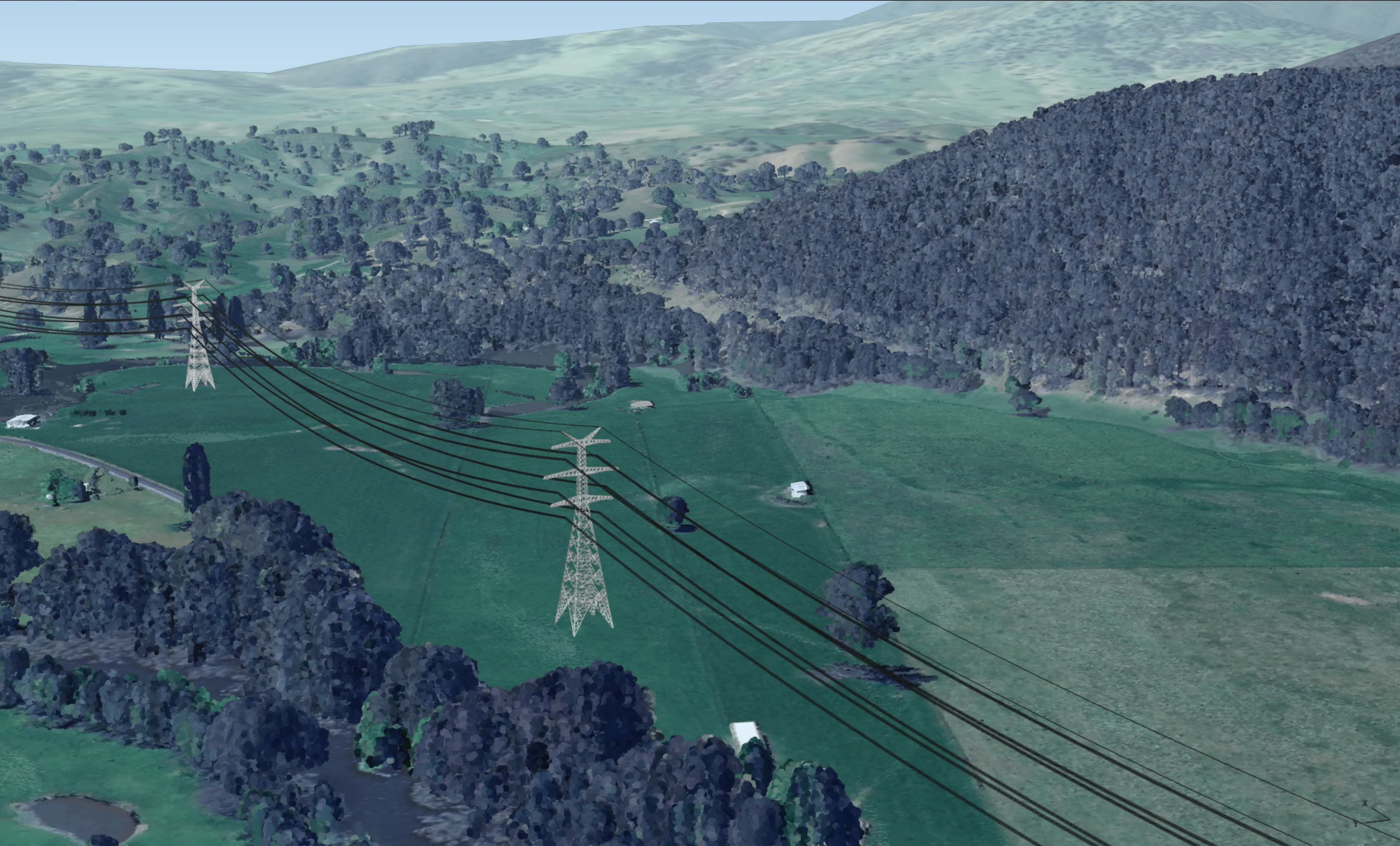
A single planning-to-approval process in a single physics-backed model
Design new distribution or transmission corridors, or single-structure modifications, in one responsive model, testing every route, pole class, and span against your engineering standards, constructability, resiliency, and cost.
Simulate and rank route options against cost, safety, and resiliency
Validate every design against the standards your engineers already use
Know the construction impact of every design change before breaking ground
The problem
Fragmented design processes make costly rework and delays inevitable
Capital decisions get made faster than engineers can de-risk the design, and flaws slip through review. GIS, spreadsheets, CAD, and site tours each check part of the picture, but none validates how the design actually performs end-to-end in a physics-based, real-world context.
- A low-cost corridor from GIS hides vegetation and access costs that force a redesign
- A CAD-approved design clears vegetation, raising wind exposure and loading beyond the assemblies specified
- Relocating one structure around a terrain hazard shifts span lengths and material quantities across the design
The spreadsheets meant to stitch these steps together turn brittle, leaving construction teams building from outdated inputs.
From pole-by-pole engineering to structural intelligence at scale
From To
Sequential validation Continuous validation
Over- and under-building “Just-right” design specification
Identifying roadblocks Identifying solutions for roadblocks
Passing design reviews Engineering the best solution
Make better design decisions with modeled trade-offs
When every design variable lives in one physics-backed model, you can trade off speed, cost, and structural integrity with evidence rather than instinct.

Right-size every structure matching each configuration to your target risk and cost profile, whether you're building new, replacing aging assets, or rebuilding after a storm.

Optimize every design objective simultaneously seeing instantly how each combination of variables affects loading, compliance, bill of materials, cost, and delivery timelines.

Hand construction a plan that's already validated with clearances, assemblies, and bill of materials checked against the model up front, so crews build from current, buildable inputs.
Real-world applications
Transmission routing and design plan in under two weeks
Reduce engineering time per pole by 40%
85% faster design output generation
 Australia
 <2 wks to final
design plans
design plans
The Challenge
Final design plans were due for a new transmission line spanning nearly 200 miles of complex terrain, on a compressed timeline.
The Analysis
The team simulated and compared multiple route options in a single physics-based model, validating clearances, land access, and optimal assemblies before selecting a path.
The Outcome
Final design plans were delivered in under two weeks, avoiding a potential 12-month project delay.


From validating design drawings to validating design behavior
From To
Paper process and PDF snapshots Instant constraint feedback
Brittle spreadsheets A living engineering model
Resolving one issue at a time Optimizing the entire design at once
Explore all workflows
See what Neara can do for your network.
Join the utilities already running their networks on a physics-enabled digital twin.