
Execute more informed PSPS decisions moving past broad weather thresholds to see which feeders truly warrant PSPS, and which can safely stay energized.
Solutions
Wildfire Mitigation
Go from understanding wildfire conditions around the network to understanding exactly how your assets behave, and what drives failures within them.
See how all wildfire risk variables intersect
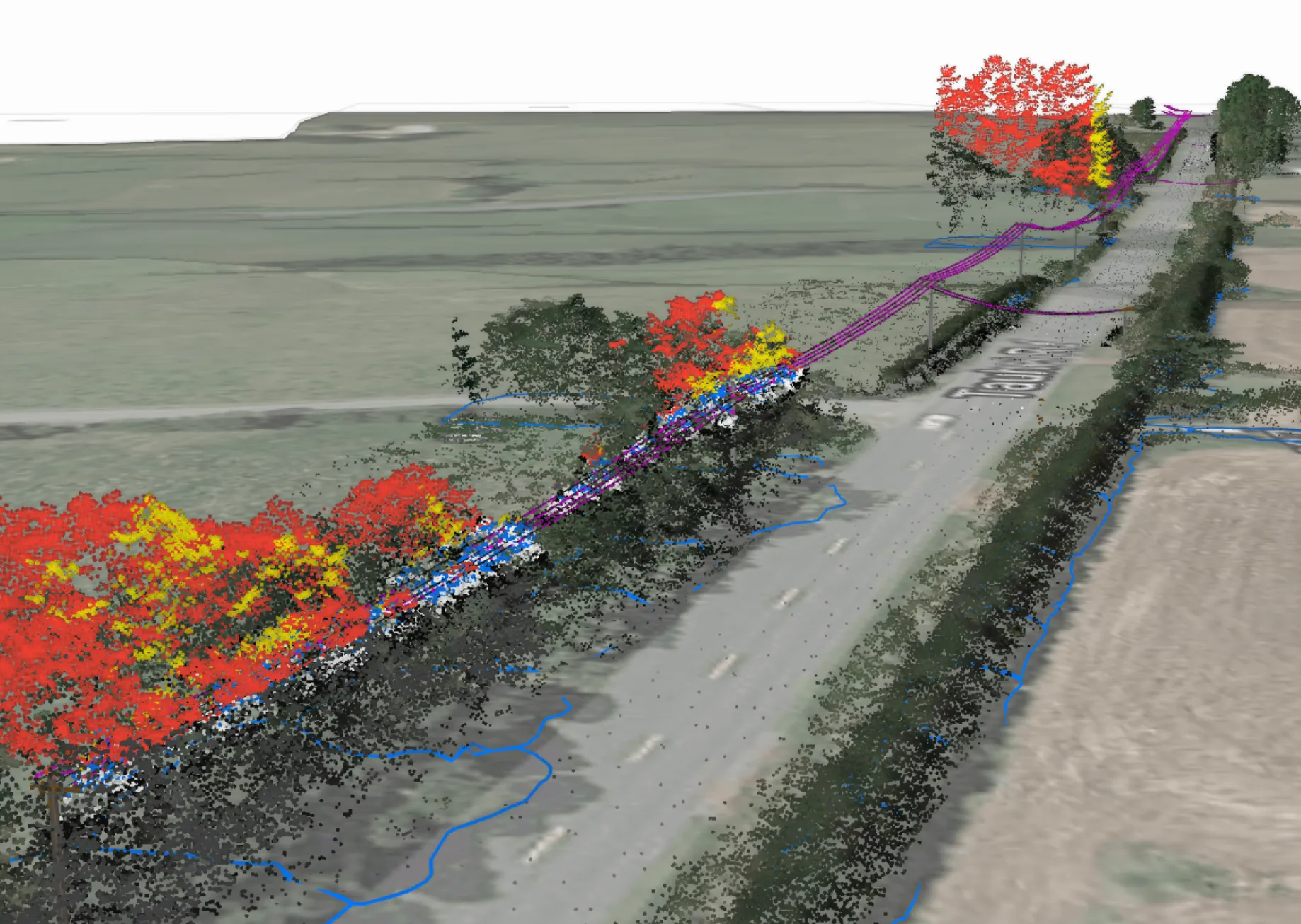
You already understand the primary wildfire risk variables. Now understand how they interact across your entire network. Bring pole loading, asset condition, vegetation, GIS accuracy, weather, and consequence together in a physics-backed model to simulate a range of outcomes, and calibrate wildfire mitigation investment with confidence.
Align and sequence inspections around shared risk outcomes, bringing vegetation and equipment work together at the right time.
Justify targeted hardening with a defensible business case for undergrounding, covered conductor, and pole replacement based on clear ignition-reduction potential.
Prioritize by combined risk where equipment condition, vegetation, weather, and consequence combine to create the highest wildfire risk.
The problem
Programs address individual risks, but wildfires emerge from their combination
Even the most mature wildfire, vegetation, and asset programs are forced to evaluate contributors to risk separately, yet risk emerges across the network as a whole. Because workflows run on different cycles, managed by different teams with access to different data, the most consequential risks are hard to identify, prioritize, and prove mitigated, while lesser offenders draw disproportionate attention.
- 95°F heat and a leaning pole pull conductors down into overgrown hillside brush
- An overutilized pole missing from GIS, with unmanaged oak encroachment, hides an ignition risk
- Worn spacers plus 40+ mph crosswinds clash conductors beneath an otherwise cleared eucalyptus canopy
Seemingly manageable vegetation, equipment, and weather conditions look fine inside individual programs, but taken together in everyday reality they interact to create outsized wildfire risk.
From program-level outputs to customer outcomes
From To
Uncoordinated inspection plans Sequenced, risk-based inspection programs
Asset-level risk scores Network-level ignition risk
Identifying vegetation encroachment Removing vegetation risk
Demonstrating compliance Demonstrating wildfire risk reduction
Identifying dangerous asset defects Understanding how defects, vegetation, and weather interact
Make better wildfire decisions with modeled outcomes
When every wildfire risk variable lives in one physics-backed model, you can trade off cost, risk, and customer impact with evidence rather than instinct.
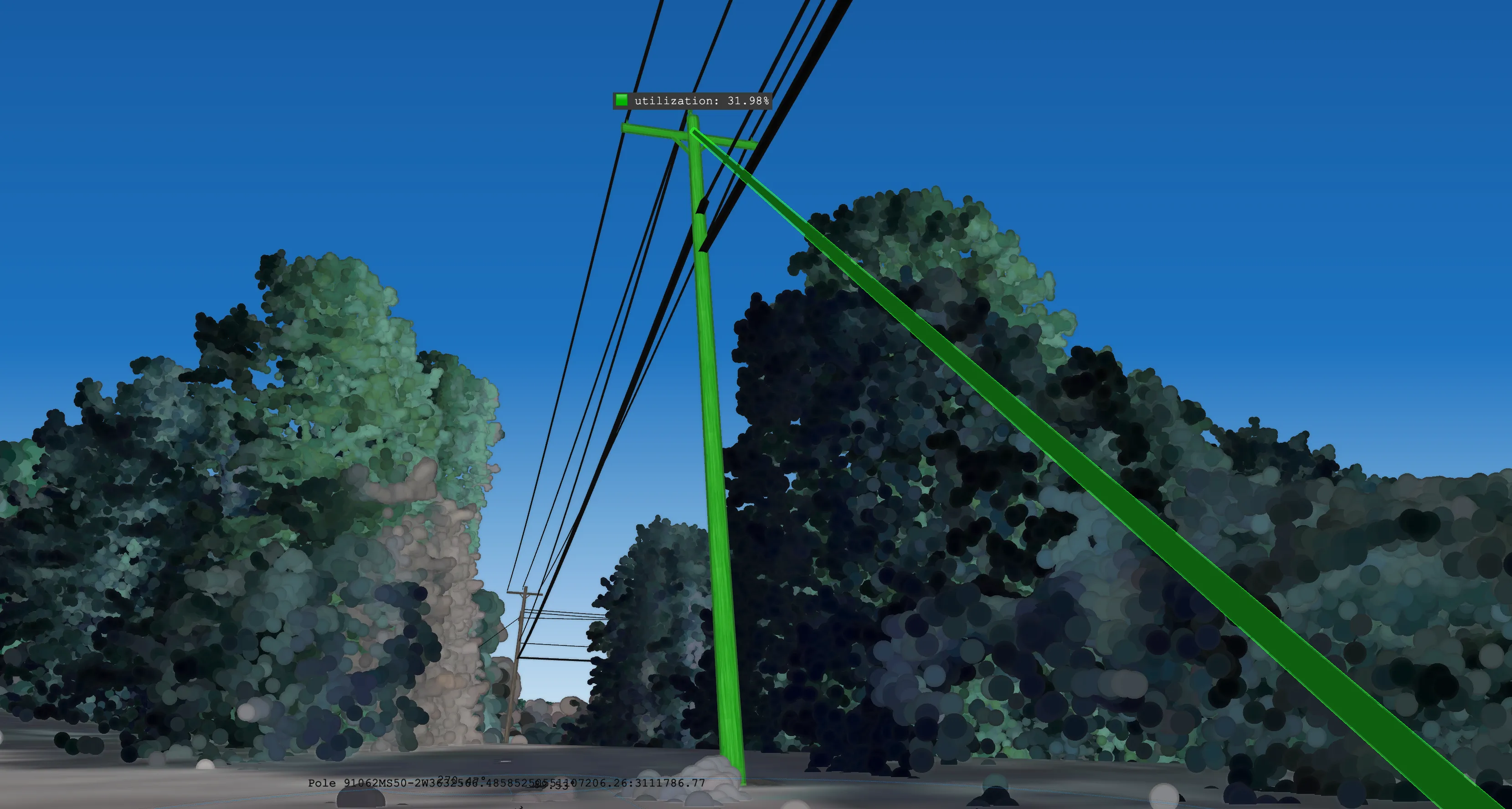
Maximize wildfire risk reduction per dollar seeing which investments cut the most risk span by span, and where covered conductor or undergrounding fits best.
Establish the optimal mix of mitigation work by quantifying how much vegetation work, spacers, pole replacement, and undergrounding each reduce risk per span.
Untangle customer impact trade-offs across cost, risk, affordability, and customer interruptions, so every call reflects real customer impact.
Real-world applications
Simplifying and strengthening a mature wildfire program
Aligning inspection programs on shared high-risk spans
Standing up a wildfire program from square one
 United States
 $6-12M in annual
cost savings
cost savings
The Challenge
The utility had built one of the industry's most sophisticated wildfire mitigation programs, but needed a more transparent, flexible way to explain, validate, and expand it as regulatory expectations grew more complex.
The Analysis
By simulating the same scenarios in a single physics-based environment, the team compared the efficacy of different mitigation activities using a common methodology, instead of reconciling results across multiple independent models.
The Outcome
A more understandable and defensible foundation for regulatory reporting, and $6-12 million in annual cost savings.
From wildfire analytics to ignition simulation
From To
Identifying risk factors Understanding risk interactions
Spreadsheets Physics-backed simulation environment
Complex internal models reliant on institutional expertise Auditable models anyone can understand
Historical ignition patterns Simulated future conditions
Compliance-driven planning Risk-driven investment
Explore all workflows
See your network as one physics-enabled digital twin
Book a personalized demo and discover how leading utilities are transforming their wildfire programs.