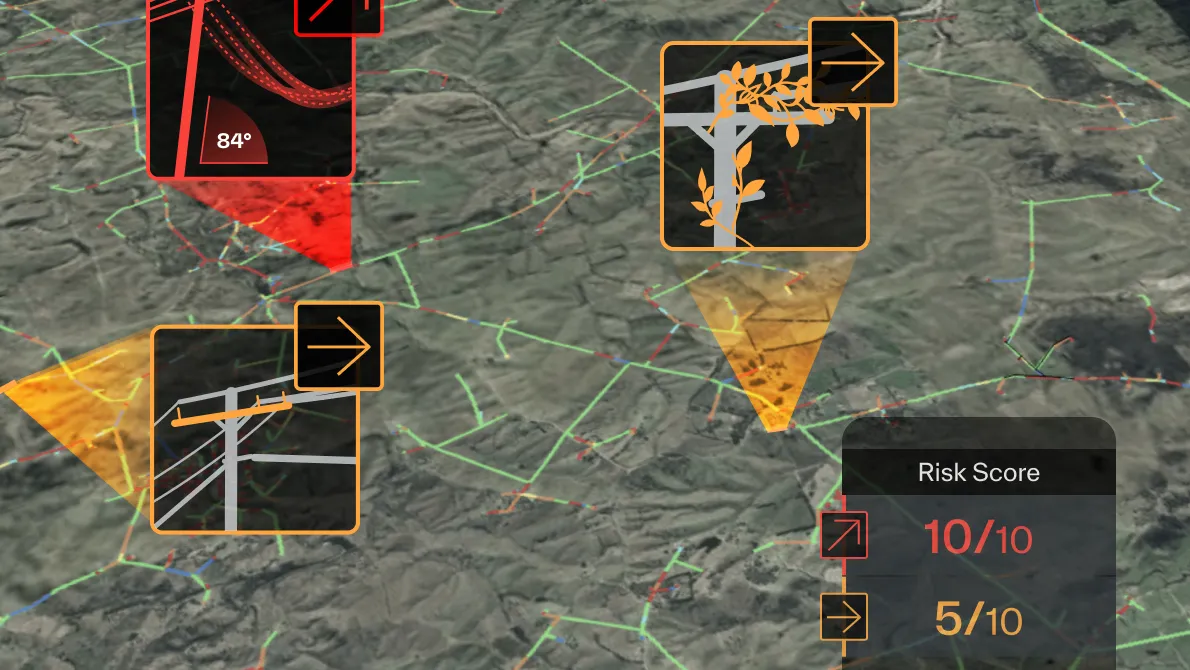
US utility fines and violations have increased 800% in the last five years, yet most utilities are still relying on manual field surveys that cover only a fraction of their networks, capture assets in ideal conditions, and lack the precision needed to prioritise risks effectively.
This primer examines the critical gaps in legacy risk management and makes the case for a digital-first approach. It identifies three major shortcomings in how utilities currently manage network risk:
- Reactive discovery is penalised: strict remediation requirements discourage proactive risk identification
- Risks are assessed in isolation, not under real operational conditions like extreme heat, high winds, or flooding
- Remediation is one-size-fits-all: expensive default responses where targeted cost-benefit analysis would suffice
The guide outlines how AI-driven predictive modelling establishes a comprehensive digital network model, conducts severe-weather stress tests, and prioritises risks by impact rather than discovery order, helping utilities secure regulatory approval for necessary investments.