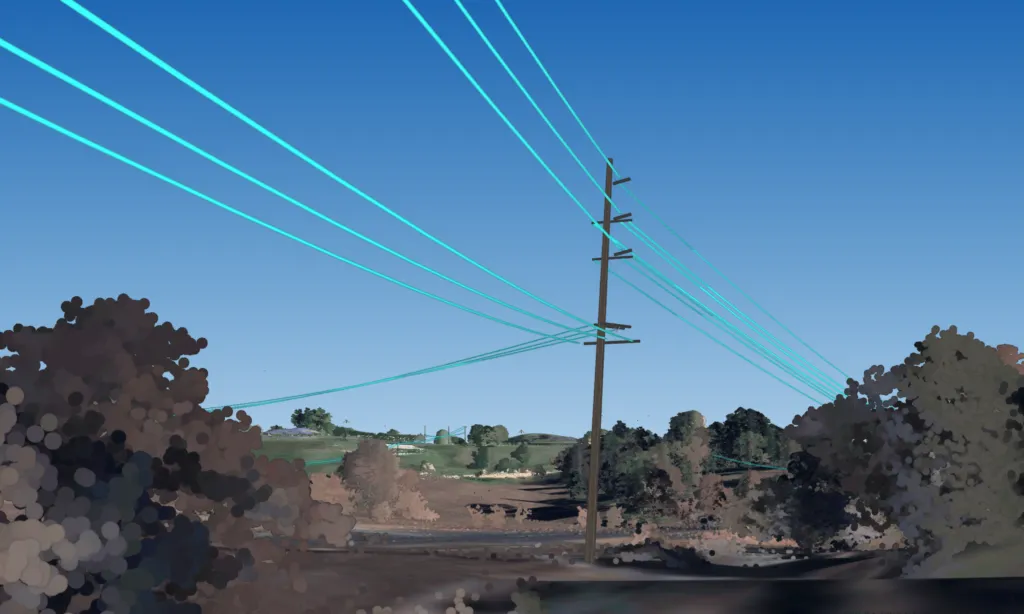
Most utility risk management is reactive. A problem is found, a ticket is raised, a crew is dispatched. Predictive modelling changes the equation by identifying risks before they cause failures, across the entire network simultaneously, under conditions that haven’t happened yet.
This guide outlines a five-step approach to building a predictive risk management capability:
- Build a digital model from existing GIS, LiDAR, and imagery data
- Correct data errors to pinpoint accurate asset locations and conditions
- Conduct weather stress tests simulating wind, heat, flood, and fire scenarios
- Prioritise risks using custom thresholds based on consequence, not just condition
- Execute risk-reduction analysis to guide targeted, cost-effective remediation
The approach enables utilities to shift from reactive maintenance to systematic, data-driven risk management across entire networks, rather than individual assets inspected in isolation.