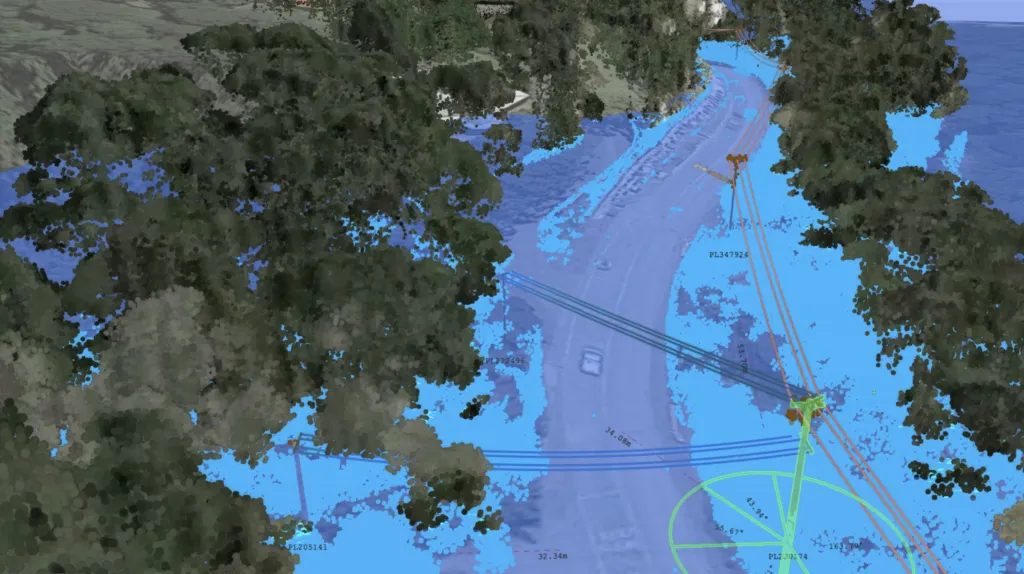
Flood events are becoming more frequent and more severe—but most utilities are still responding reactively, assessing damage after the fact rather than anticipating vulnerabilities in advance. This primer outlines a three-phase flood management strategy built on engineering-grade 3D digital models.
Anticipate—Simulate real-time flood conditions using LiDAR, GIS, and weather data to identify which assets are at risk before waters rise. Understand clearance levels across the entire network, not just inspected sections.
Prepare—Design data-driven power dispatch strategies and prioritise grid hardening efforts based on physics-based risk assessments. Know which assets to harden and where to pre-position crews.
Respond and recover—Execute faster, safer damage assessments once floodwaters recede. Prioritise restoration based on actual asset condition, not just geography.
SA Power Networks used this approach to reduce restoration time from three weeks to five days by monitoring water and clearance levels daily throughout a flood event.