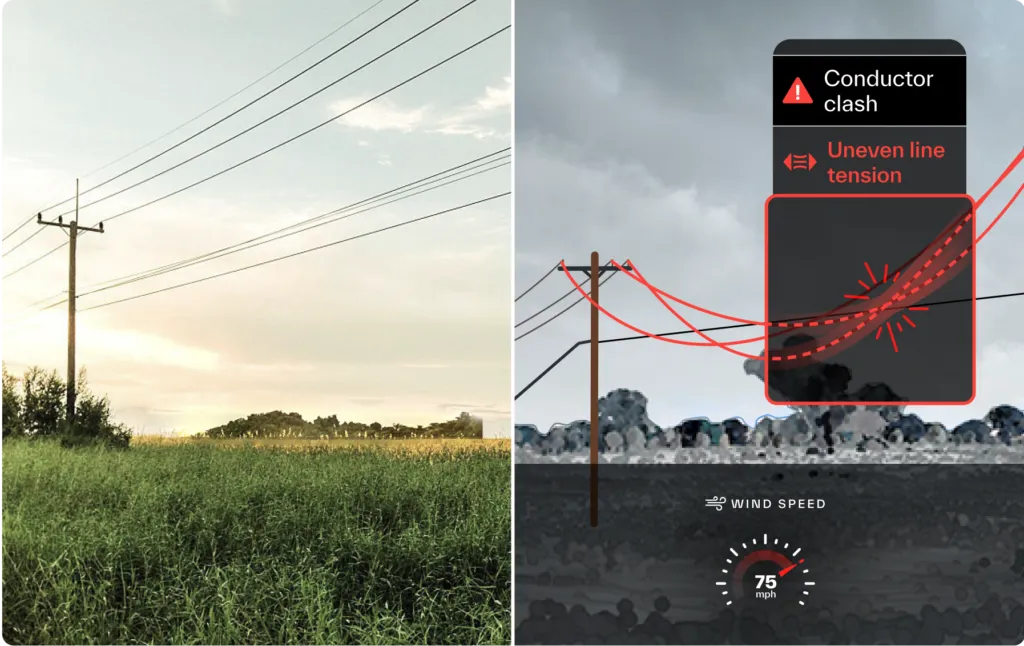
Most utilities aren’t failing to manage risk because of a lack of effort. They’re failing because the frameworks they operate within were designed for a different era. This guide identifies three structural problems in how utilities currently approach infrastructure risk.
1. Reactive discovery is penalised
Regulations often require remediation of any risk identified during an inspection. The unintended consequence: utilities are discouraged from looking too hard. The system penalises proactive discovery, creating a culture where finding risks is as much a liability as a benefit.
2. Risks are assessed in isolation
Traditional standards evaluate whether an asset meets a threshold under normal conditions, not under the operational stresses that actually cause failures. A pole that passes inspection on a calm day may be critically vulnerable at 100km/h winds or during a flood event.
3. One-size-fits-all remediation
When a risk is identified, the default response is often the same regardless of the actual consequence severity. This leads to expensive interventions in low-consequence locations while high-consequence risks receive the same treatment, or are deferred due to budget constraints.
The guide advocates for a shift toward well-defined, context-rich risk prioritisation that enables utilities to address infrastructure challenges based on actual impact rather than discovery timing or regulatory default.